Podcast

See all Podcast episodes as they are posted each month

Emergency Medicine in Malawi

720 480 Jo Park-Ross

Post by Mulinda Nyirenda and Jo Park-Ross

This podcast is an interview with Dr Mulinda Nyirenda and details the current state of Emergency Medicine and pre-hospital services in Malawi, as well as the way forward and Mulinda’s hopes for the future of Malawian EM. I must admit a more than slight bias on the topic of Malawi as I grew close to the city of Blantyre where Mulinda works.

Most of the Malawian population live well below the poverty line, and are rural subsistence farmers. While the health services provided by the state are free, the hospitals often have no medicine or consumables, and these must be purchased by the patient or their family at a pharmacy. Infant and maternal mortality rates and HIV/AIDS infection rates are high, as well as a high burden of Malaria and other infectious diseases.

Thank you Mulinda for your time and for all the wonderful work you are doing for Malawi!

Emergency Medicine in Malawi

Dr. Mulinda Nyirenda is a senior consultant in the emergency department at Queen Elizabeth Central Hospital, Blantyre, Malawi. She also holds a clinical lecturer post within the University of Malawi -College of Medicine; promoting the teaching of Emergency Medicine and Acute care in the country.

Simulation as a vehicle to excellence, improved patient safety & organisational learning with David Grant

660 330 Jo Park-Ross

Dr David Grant is a simulation expert who advocates the use of simulation, including human factors and crew resource management principles, being actively used in the healthcare environment as part of a pro-active risk management system.

Traditionally, simulation doesn’t get much of a positive reception – but we actively need to change that perception of judgement. To err is human, and as such we need to ensure that our mistakes are made on mannequins, not on patients! Simulation in our work environments aims to work on the human factors – there is good evidence that poor communication in healthcare teams is associated with poor outcomes for patients (as discussed in the video).

WHY is this important?

  • Improving care: Because we need to test our systems and patient care to ensure a patient gets the very best care no matter where they are – for example when introducing a new piece of equipment such as an intra-osseous gun
  • Complexity: simulating a procedure and training as a team to react to adverse events such as equipment failures best prepares us
  • Life long learning is important for all members of the team!

Thank you to Fahmi Adams for the video!

Interested in being trained by David Grant and his team of excellent simulators?

Here’s your chance:

About David Grant

After graduating from the University of Stellenbosch, David trained in Paediatrics and Paediatric Intensive Care in South Africa, United Kingdom and Australia. He is actively involved in implementation of simulation and technology enhanced educational tools at a local, regional, national and international level. He currently works at the Bristol Royal Hospital for Children as a PICU consultant.

To learn more:

Bristol Medical Simulation Society

The International Pediatric Simulation Society

Ubuntu #4: The curious case of the ligamentum arteriosum

1063 1125 Jo Park-Ross

Author: Pierre Smit

Original presenter: Dr John Roos

Editor: Jo Park-Ross

At approximately 07H00 Ubuntu Aeromedical Service received a call on their rotor-wing platform for a young gentleman who had fallen from a height of approximately 5 meters. They were told that the incident had occurred at 06H00, and that the patient was standing on the trailer of a truck when it suddenly moved forward, causing him to fall off of the back end, head-first onto the concrete floor.

On arrival (09H55), they found the patient with typical signs of a severe traumatic brain injury:  GCS of 4/15, Cheyne-Stokes breathing, signs of a basal skull fracture, a combination of Le Forte fractures and sluggishly reactive pupils which were equal in size. However, the patient also showed signs of severe decompensated hypovolaemic shock with a low blood pressure (63/51), pale, mottled, cold and clammy skin, and a delayed capillary refill time.

One would have expected to see a ‘Cushing’s response’ to the raised intracranial pressure consequent upon the severe traumatic brain injury (a well-perfused patient with hypertension and bradycardia).   So, what happened here – how does one explain this paradoxical clinical presentation?

Shortly after the assessment of the patient was completed, the decision was made to intubate using rapid sequence intubation. However, during preparation for intubation, the patient deteriorated rapidly, went into cardiac arrest.   After resuscitation attempts proved futile, the patient was declared dead on scene. The treating paramedic then decided to consult with the Continuous Quality Improvement department at Ubuntu Aeromedical Service, to gain  clarity about the conflicting clinical signs in this mystifying “isolated” traumatic brain injury [about this extraordinarily complicated case].

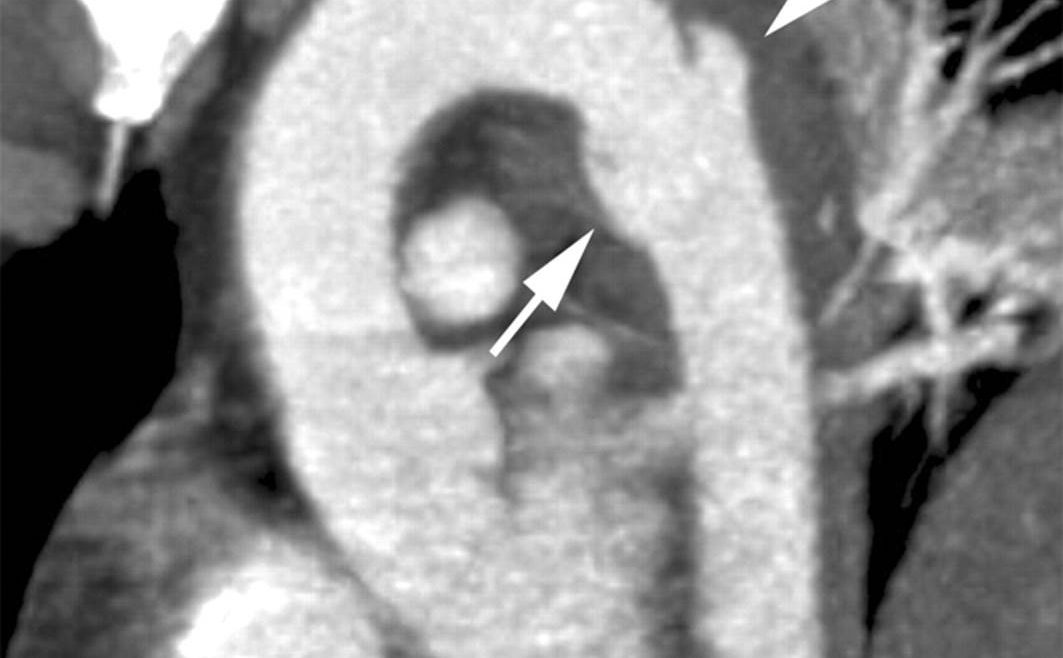
An autopsy was later performed on the patient which revealed the following: confirmed base of skull fracture, intracerebral haemorrhage, pulmonary and cardiac contusions and massive bleeding within the thoracic cavity. Together, these post-mortem diagnoses paint a pretty grim picture. So the prevailing question is: what on earth happened in the chest cavity to cause such a catastrophic bleed? The answer might be a little surprising, as all that bleeding might have resulted from the traumatic failure of a single ligament, the ligamentum arteriosum.

During our foetal development the ductus arteriosus, which links the distal distal aortic arch to the pulmonary artery, is a conduit to shunt blood away from the pulmonary circulation into the systemic circulation. While in utero, oxygenation does not occur in the foetal lungs. But rather, oxygenated blood is delivered to the foetus from the mother, through the placenta and umbilical cord, before being introduced into the inferior vena cava. The ductus arteriosus serves a vital function, as perfusing the lungs when they are not being oxygenated would be fairly pointless.

After birth, the ductus arteriosus begins to close as soon as the neonate breaths spontaneously and blood is once again reintroduced into the pulmonary circulation. Over time, the ductus arteriosus undergoes a transformation from endothelial tissue to fibrous tissue, at which point it becomes known as the ligamentum arteriosum. The ligamentum arteriosum is a fixed structure which forms a ‘tether’ between the aortic isthmus and pulmonary artery.

The distal part of the aorta (as it becomes the thoracic and abdominal aorta) is a relatively mobile and ‘heavy’ structure as it is filled with a large amount of blood. Similarly, the proximal aorta behaves much in the same way, in that it is relatively mobile in comparison to the aortic arch, where it is secured by the ligamentum arteriosum.

During rapid acceleration/deceleration injuries such as motor vehicle accidents or falls from height, the mobile sites of the aorta begin to move in response to the injury, whilst the relatively fixed (or immobile) ligamentum arteriosum prevents the aortic arch from moving. This causes a tremendous shearing force on the aortic wall, and can lead to severe damage of the aortic lining as the ligamentum arteriosum tears out of the aortic wall – and in severe cases results in aortic wall rupture. A rupture of the aorta will lead to massive bleeding within the thoracic cavity, much like was seen in the patient discussed above.

A few numbers

Motor vehicle accidents and falls from height are the two most common causes for traumatic aortic rupture, followed by pedestrian vehicle accidents and crush injuries. Around 0.5% – 2% of all non-lethal motor vehicle collisions and 10% to 20% of all high-speed deceleration fatalities cause traumatic aortic rupture. When you consider these figures, the diagnosis of traumatic aortic rupture carries a considerable risk of mortality, and is immediately lethal in 80% – 90% of cases. However, in contrast to these morbid figures, if aortic rupture was detected in time and the patient was taken to a suitable hospital with sufficient surgical capabilities, the survival rate following definitive care is 60% – 80%. Therefore, prompt recognition and definitive treatment of these injuries are paramount for survival.

Identification and Diagnosis

So now to the nitty gritty, how do we identify and diagnose traumatic aortic rupture? Unfortunately diagnosis would be close to impossible in the field, with signs and symptoms too unspecific to indicate traumatic aortic rupture, apart from severe hypovolemic shock. However, practitioners in the field should keep a high index of suspicion in cases where rapid acceleration/deceleration has occurred. Radiological investigations seem to be the most useful at diagnosing traumatic aortic rupture.

Chest X-rays offer limited diagnostic value, as they can often appear close to or completely normal in traumatic aortic rupture. Evaluation for mediastinal haematoma, and by inference a major vascular injury, is the main goal of initial chest radiograph. Mediastinal widening greater than 8cm and/or 25% of the width of the thorax is the most frequent observation. However, it may not always be the most sensitive finding. More discriminating findings include any abnormality of the transverse aortic arch or loss of the aortopulmonary window. Therefore, even in those cases where the mediastinum is not widened, obscuration of the lung interface with the transverse or descending thoracic aorta should still be viewed with suspicion.

Computerised Tomography (or CT) scans are extremely useful for identifying and diagnosing traumatic aortic rupture as their contrasts between solid (tissues), fluid and gases are much clearer than chest X-rays. They offer a clear view of the continuity of the intima in the aorta, and ruptures or tears or easily visible.

Conclusion

When one considers the complexity of this case, where a severe traumatic brain injury presented together with catastrophic hypovolemic shock, it is understandable that the patient’s prognosis was very poor from the outset. However, the initial delay of an hour in activating the rotor-wing aircraft and crew, together with delays in arriving at the scene, meant that the patient had a three hour window where definitive care could have been potentially life-saving. As mentioned above, a high index of suspicion, early identification and definitive treatment are key factors to improve survival rates, and although these injuries can be immediately fatal in many instances, the survivors have a good chance of recovery if given prompt definitive care.

Pierre Smit is a flight paramedic in Cape Town South Africa who has recently completed his MPhil: Emergency Medicine at the University of Cape Town.

In his own words: “I am a passionate, fun-loving person with a desire to be as involved in Emergency Medicine education as I possibly can. I have high hopes for developing critical care in South Africa for the pre-hospital setting in the coming years, which is a goal I strive towards every day.  I am also an avid Mountain-biker and adventure-videographer with the old fractures and scars to prove it.”

Interview with the author: Hendry Sawe on recent AfJEM publication on POCUS in Tanzania & Mexico!

1900 500 Kat Evans

Series: “Interview with the Author…”

logo2

The badEM crew interviewed Hendry Robert-Sawe regarding his newly released article in AfJEM Volume 6 Issue 3 entitled: “Bedside ultrasound training at Muhimbili National Hospital in Dar es Salaam, Tanzania and Hospital San Carlos in Chiapas, Mexico” by Teri A Reynolds, Jeanne Noble, Gehres Paschal, Hendry Robert Sawe, Aparajita Sohoni, Sachita Shah, Bret Nicks, Victor Mwafongo, John Stein

Link to open access article: Click here

Corresponding author email: hendry_sawe@yahoo.com


1. Tell us about yourself. How did you get involved in this field/this research?

I have broad experience in emergency medicine & global health policy, with specific training in qualitative & quantitative research methods & a focus on emergency care system development in sub-Saharan Africa. As PI or co-investigator on university- & foundation-funded grants, I have worked to build emergency care research & clinical capacity in low & middle income countries, including the creation of open-access curricula & research instruments. I previously directed the Emergency Medicine Residency & research programs at Muhimbili National Hospital in Tanzania. As part of this project, I successfully led a multi-university-collaboration, creating the infrastructure for both educational & research initiatives that have been sustained & expanded since handover to local leadership. As Chair of the African Federation for Emergency Medicine (AFEM) Scientific Committee, I served as Editor of the AFEM Emergency Care curriculum & directed the AFEM regional Trauma Data Project. In my current role leading the emergency & trauma care program in the Department for the Management of NCDs, Disability, Violence & Injury Prevention at WHO Headquarters in Geneva, I lead a range of initiatives to assess & strengthen emergency care systems. My activities include conducting research to establish an evidence base for the impact of emergency care & to evaluate the impact of a range of system development initiatives.

2. What were the key findings from this study?

Introducing bedside ultrasound in two distinct resource-limited settings was feasible & well-received. Providers were very interested in receiving training in bedside ultrasound & completed all course sessions, even though participation significantly increased the length of their work day. After a brief intensive period of training, participants successfully passed a comprehensive examination, including demonstration of standardized image acquisition & accurate interpretation of normal & abnormal studies. Overall, participants were satisfied with the course, although there approximately one-third of providers at both sites would have preferred more hands-on training. Obstetrical, hepatobiliary & trauma applications were identified as the most useful.

3. What do these findings mean within the African context?

Ultrasound is both feasible & an affordable bedside diagnostic tool that can be deployed with minimum training to providers across Africa with significant impact to a substantial number of patients. Hospitals & programs should advocate for more use & access to bedside ultrasound availability to support care, regardless of the level of hospital (Tertiary vs Lower).

Check out the full-text open access article:  Click here


More about AfJEM (excerpt from their newsletter)

AFEMAfJEM is an open access publication in the spirit of bringing #FOAMed to Africa. This is an important consideration, especially in a low to middle income setting where prospective readers, that may benefit from published information, will most likely not be able to access subscription based journal content.  The AfJEM has no front end (author) or back end (reader) fees, & on top of that it offers a free Author Assist service that has been shown to reverse one in every four reject decisions (of manuscripts that fall within the journal’s scope) over the last five years.


More from AFEM:

Supadel (clear)
Support a delegate (Supadel) is a conference sponsorship program with a difference. Supadel is a peer-to-peer sponsorship scheme that enables prospective AfCEM2016 delegates from developed regions to financially support their peers from low & middle income countries.
For more information, to donate or to apply visit the: Sponsorship application page

Interview with the Author: AfJEM: Michael McCaul on South African pre-hospital guidelines

1900 500 Kat Evans

image

Series: “Interview with the Author…”

logo2

The badEM crew interviewed Michael McCaul regarding his newly released article in AfJEM Volume 6 Issue 3 entitled: “South African Pre-hospital  practice guidelines: Report on progress & way forward” by Michael McCaul, Ben de Waal, Peter Hodkinson & Karen Grimmer

Link to open access article: Click here

Corresponding author email: mmccaul@sun.ac.za

Author’s twitter handle: @MikeMcCaul3


1. Tell us about yourself. How did you get involved in this field/this research?

About myself

This is often a difficult question to answer. The answer requires a story, otherwise you only get to know about half my life! Currently, I am a researcher and biostatistics consultant at the Biostatistics Unit within the Centre for Evidence-based Health Care (CEBHC) at Stellenbosch University (Life 1). However, my roots stem as an operational paramedic (emergency care practitioner) working mostly in private emergency medical services (EMS) (Life 2). I know, how on earth do you transition from clinical practice to research and statistics? The answer in my case was pretty simple – I was not content with the status quo: using outdated protocols, feeling ill-equipped to challenge practice & lack of professional development. This made my next step really easy & I equipped myself to be able to change by doing my masters in clinical epidemiology. I am now in the process of studying towards a PhD in public health & currently further specialising in biostatistics, research synthesis & guideline development.

About the research

Under the leadership of the African Federation of Emergency Medicine (AFEM) & various other collaborators mentioned in the editorials, the AFEM team responded to an open call from the Professional Board of Emergency Care (PBEC) to review the current national Emergency Medical Services (EMS) protocols. The CEBHC was a specialised collaborator within this call focusing on methods & synthesis. In our editorial series we reported on the current state of EMS guidance in South Africa & in the latest issue provided an update on the guideline development project (which has been released by the PBEC) & the next steps that needs to be taken.


2. What is the key message of the editorial?

The key message is really threefold. Firstly, for the first time in Africa’s history a truly evidence-informed clinical practice guideline has been developed. Not a protocol, not a list of pharmacopeia but a document that reflects current best evidence recommendations to guide emergency care decision makers, educators & most importantly the emergency care providers.

This leads me to the second key message – guidance implementation. A clinical practice guideline can only impact practice at the coal-face (the bedside) if the implementation strategy takes in consideration the local context & rolls out best-practice recommendations using multi-faceted interventions that includes paramedics as shared-decision makers. In South Africa, the onus & responsibility now lies with the emergency care profession as a whole to engage with the guideline implementers (the PBEC), focusing on constructively highlighting implementation concerns, existing system gaps & providing sound solutions to problems.

The AFEM CPG development project team has synthesised & reported on the best available evidence for emergency care practice relevant to South Africa. We have an unprecedented opportunity to align our profession to international clinical practice standards. This includes the opportunity to challenge the system, identifying where evidence is uncertain or lacking (ie. scope & practice limitations) & driving change to the benefit of our patients and the needs of all paramedics.

Lastly, best evidence is often a hard pill to swallow, especially if it challenges the status quo, even if it is to our patients benefit. The problem the profession faces today, is not about the evidence – the evidence is clear enough. The problem we face today is about the status quo, it’s about the lack of inclusive educational reform, it’s about paramedics leaving our country, it’s about not wanting to change & it’s about lack of leadership to ensure change.

What was our key message? It is about change, change for the better & getting all of us to be part of making it happen.

Check out the full-text open access article:  Click here


More about AfJEM (excerpt from their newsletter)

AFEMAfJEM is an open access publication in the spirit of bringing #FOAMed to Africa. This is an important consideration, especially in a low to middle income setting where prospective readers, that may benefit from published information, will most likely not be able to access subscription based journal content.  The AfJEM has no front end (author) or back end (reader) fees, & on top of that it offers a free Author Assist service that has been shown to reverse one in every four reject decisions (of manuscripts that fall within the journal’s scope) over the last five years.


More from AFEM:

Supadel (clear)
Support a delegate (Supadel) is a conference sponsorship program with a difference. Supadel is a peer-to-peer sponsorship scheme that enables prospective AfCEM2016 delegates from developed regions to financially support their peers from low & middle income countries.
For more information, to donate or to apply visit the: Sponsorship application page

There is no standard like gold standard

150 150 Jo Park-Ross

‘It is a truth universally acknowledged, that a single editor in possession of a new journal, must be in want of a strong drink’

Adapted from Jane Austin’s Pride and Prejudice

Author: Stevan Bruijns

Editor: Jo Park-Ross

Much is written about knowledge translation, or breaking down science from journals so it can benefit real-world, patient encounters.  We want to know more so we can do more, and what we know is published in journals from science we have put together in the hope of serving our patients better.  In short, it is all about the patients (ignoring stuff like promotion, citations and a higher h-index of course).  There are 72 journals registered today that describe themselves as emergency medicine journals (yes folks, 72). Of these, 10 (14%) are registered in low-and middle income countries (in Eastern-Europe, Middle East, Asia and Africa – note there is none in South America) whilst the rest is registered in high-income countries.  Arguably this looks a little heavy on the high-income side.  So let me take it one step further; if we say research is really all about the patients we could express the number of journals in a region as a function of the potential patient population inhabiting that region.  Take a moment or two to soak in the information contained on these two maps before continuing.

Map showing the number of registered Emergency Medicine journals per country and continent.

Map showing number of journals in a region as a function of the potential patient population inhabiting that region.

Sure, I am obviously oversimplifying things.  Journals do not just publish material from their own regions, but from other regions too; however, I would wager that for the majority of out-of-region publications, publications remain largely within the same income band.  But is this really such a problem?  Many would say that several parts of emergency care are universal in their application.  And to some extend this is true, but only to some extent.  Take for instance CPR.  Defibrillator aside, one does not need many resources to bounce up and down on some poor soul’s chest.  But I will tell you what you do need and that is an ICU at the backend for those who have return of spontaneous circulation, and ICUs don’t grow on trees, not in high income settings, and much, much less so in low-and middle income settings.  And the same argument goes for many well-meant standards of care, or gold standards as it is referred to colloquially: stroke, sepsis, injury, acute coronary syndrome to name but a few.   So what is important to understand when we view these maps is that it reveals exactly where gold standards are penned. Gold standard, it turns out, is the top prize you achieve when you do it right in a high income setting and the unachievable, unreachable standard if you practice anywhere else.  To me that does not sound quite right.

Anywhere else is big.  The World bank tells us that 71% of the world’s population live in low income settings (earning less than $1025 per annum) with an additional 22% living in middle income settings (earning less than $12475 per annum).  Imagine trying to publish a study that promotes a bundle of care that only applies to 7%, or at the very most 29% of the affected sample.  It would, to put it quite simply, never see the light of day.  But this is what we do and frankly it is not surprising.  Is it perhaps that when we come to publishing we are not truly altruistic in our motive?  Are the lure of promotion, citations and a higher h-index a stronger motivation?  I do believe it is that, and lots and lots of ignorance.  But the problem does not stop there.  It goes far deeper than a set of skewed reference standards.  If low- and middle income countries were able to access those huge volumes of papers published in journals representing high income settings they might consider the accepted gold standards and attempt to contextualise or adapt it for local use.  It is not the ideal solution, but it is at the very least a start.  All they would need is access.

Publish or perish is not the nicest of prospects to build a career on and I am not fully convinced that fundamentally we understand this fully.  A local undergraduate project I supervised looked at access to African Emergency Care research publications.  Surely if Africa is to provide answers for African problems we should not simply be able to do the research, but also access it.  The study included 668 original research papers and reviews published between 2011 and 2015.  Following a stepwise approach we first identified all open access papers; then from the remaining papers we identified those that could be found in repositories, etc. and finally we identified the papers that authors would provide on request.  Quite unexpectedly the findings showed that African authors preferred open access publication, whilst non-African authors (three out of every ten corresponding authors) preferred subscription.  A full 107 (16%) papers remained inaccessible.  Only a third of authors who were requested for a copy of their paper responded in kind.  I did not anticipate that.

Now you can always trust a country with a worse economy than your own to be a budget destination for a holiday.  Everything tends to be cheaper and you can be sure to get more value for your money than you would back home.  The Big Mac index, published annually by the Economist, describes this phenomenon as a representation of the true currency value, or buying power of a currency.  In short, the reason everything is cheaper at your holiday destination is simply because your holiday destination’s currency is undervalued compared to where you are from.  Should the locals from you holiday destination try to visit your home country the reverse would apply to their detriment.  So in the same, oversimplifying vein we might apply currency value to accessing those 107 papers left behind subscription charges.  Using this argument a researcher from South Africa will feel much more out of pocket spending £23 to access a paper from a certain subscription journal than a researcher from England would spending the same amount.  In fact if we were to equalise the value using the South African charge, the English researcher would have to spend £43 – I know of no-one that desperate to access a paper.

And herein lies the great paradox of international research.  High income countries spend huge amounts on research and development, producing solutions of a high standard that requires significant resources.  But these solutions are limited in their application to only a small proportion of the world’s population; the volume of publications make its contribution appear larger than it really is.  Article access charges largely picked up by research institutions in high income settings are passed to the researcher in low- and middle income settings.  It is a destructive cycle that results in more for those who have more and less for those that don’t.  So what can you do?  Well for starters each time you have a debate about the merits (or not) of stroke thrombolysis, the value of video laryngoscopy or the utility of ECMO, bear in mind that at least 71% of the world are not involved in the conversation.  Publish open access, and if for some reason you cannot, deposit your article in a formal repository such as ResearchGate, Academia.edu, etc.  Get involved in publication mentorship programmes such as Author Assist.  If you are in a position of influence on a national, regional or international conference organising committee, ensure you invite presenters that can speak for the huge low- or middle income group your local speakers are unlikely to do.  Be aware that these speakers will not be able to fund attendance themselves.  If you can afford it, get the low- or middle income speakers to represent themselves.  Support researchers from low- or middle income settings at conferences such as DevelopingEM and the African Conference on Emergency Medicine.  And in doing so promote an awareness to help increase our efforts to improve emergency care irrespective of income band worldwide.  We are all in this together, so it is worth rather than doing the #mostforafew to do the #mostforthemost.

About the author

Dr Stevan Bruijns has been a qualified emergency physician since 2008 and was one of the first students to hold a degree in Emergency Medicine in South Africa. He is dual registered as a specialist in South Africa and the United Kingdom. His interests include service improvement in low resourced settings, emergency medicine development in low-to-middle income settings, education and trauma physiology.

Dr Bruijns’ current role allows him to address many of these interests directly through research and education. He is a person of action and like for things he does to be useful to others. Besides his desk job, Dr Bruijns does some clinical work at Khayelitsha Hospital. Khayelitsha is a deprived, largely informal community, within Cape Town’s city borders (although a million miles away in terms of resources).

For more on the topic: http://www.afjem.com/afjem-blog

#badEM16: Charmaine Cunningham – The gamble: do I pay or do I stay

1200 672 Kirsten Kingma

Selling assets in order to pay for care so that your child has a chance of survival should not be a decision that a parent is required to make, and yet often it is….

I’m Charmaine and I’m passionate about access to care.  For #badEM16 I combined some of my interests, including the system, how people in a system make sense of a situation and their subsequent decision-making process. When one considers decision-making during an emergency situation, the perceived trade-offs becomes an important concept. What is the person/family/household giving up in order to obtain and pay for care?  In low resource settings trade-offs often result in depletive strategies, where assets are sold in order to obtain care and jobs are sacrificed to travel vast distances to rudimentary care facilities. For the poor, accessing care often results in financial hardship with long-term implications. 

Emergency care should be free….

And yet it’s not.  Therefore the intricate decision regarding trade-offs become barriers to obtaining care (especially for the rural poor). One way to enhance access to early basic care at minimal cost is to involve the community.  Community responders are a low cost intervention that is relatively easy to implement and it has an immediate benefit within a community.  In order to be meaningful and sustainable the implementation should remain context-specific, which is rather tricky.

Currently in real life I’m making a trade-off…I’m learning about knowledge management, complexity science and consulting outside of healthcare.  The plan is to bring the knowledge gained outside of healthcare into the industry, using it to strengthen and innovate within the health system. Other than building these capacities, I am a part-time consumer science lecturer on topics including business management, consumer behaviour, communication and entrepreneurship.

Now for the talk

DasSMACC inside tips from the organising committee..

3200 1800 Kat Evans

Three members of the badEM Team (Kirsten, Kat & Craig) have previously attended SMACC (in Chicago & Dublin) & we have been waiting to hear what DasSMACC has in store! See our summaries of past SMACC’s below!

SMACC, the FOAMed Highlight of the Year

smaccMINI summary: Paediatric Critical Care Workshop for non-paediatricians

smaccDUB summary: Lead poisoning in Nigeria

#smaccFORCE summary: Prehospital Emergency Medicine Workshop

Here are some inside tips that we have received from the SMACC organising committee that will help you prepare for the ticket release scheduled for 25th of October at 23:00 Cape Town time:

Das SMACC Ticket Release

Delegate numbers are capped at approximately 2000 registrations again this year as we believe this is the best size to maintain our FOAM community atmosphere.  In an attempt to be as fair as possible here are the basics of how it will work:

das-smacc-tix-schedule-oct

  1. There will be 3 separate ticket releases: the major release will be as above on Wednesday, 26th October, a smaller allocation will be released on Wednesday, 7th December and a final limited release on Wednesday, 1st February
  2. Your best chance will be with the first release, but if you really need to wait until you have leave confirmed then you can chance your hand on the February release
  3. All prior delegates will receive an email reminder the week before tickets go on sale, but there is no other preference (first in best dressed!)
  4. Owing to the limited number of spots there will be no DAY ONLY registrations issue
  5. Workshop registration also opens on Wednesday, 26th October and like last year will be on a first come first served basis
  6. If you miss out on a ticket there will be a waiting list
  7. If you miss your preferred workshop there will also be a waiting list

What ’s in the program and registration at a glance for 2016?

We have taken all your feedback into consideration and planned for:

  • Another massive day of workshops on Monday, 26th June 2017 (WORKSHOPS)
  • A single stream format only featuring the best of the best (PROGRAM)!
  • The most incredible venue: the Tempodrom
  • Fabulous accommodation deals which are essential this year as Das SMACC is just before fashion week (ACCOMMODATION)
  • Registration details are here
  • The continued innovation and convenience of onsite childcare (crèche)
  • A bigger and better SMACC party. Yes, it will be massive.

Das SMACC – Berlin

The Social Media and Critical Care Conference continues to harness the immense energy of FOAM and dasSMACC in Berlin June 26-29 2017 promises to be the best one yet.

SMACC has seen spectacular growth since its humble beginnings. The Conference has grown from an enthusiastic idea into a global leader amongst critical care events. Whilst SMACC is primarily a high quality, academic meeting, the real reason behind this growth is the enormous and inspiring energy of the critical care community itself. A community that crosses traditional hierarchies, professional barriers and international borders. This is a community dedicated to innovation, teaching and learning. A community based around the pursuit of excellence in patient care, and a passion for sharing this as widely as possible.

What Makes SMACC Different?

So, why did the SMACC conference SELL OUT all 2000 delegate registrations in minutes?

To begin with, the affiliated websites supporting SMACC represent a comprehensive list of the “who’s who” in the FOAM world. The talented clinicians behind these websites have come together and harnessed their innovation, vitality and expertise to create the SMACC experience. The strong social media connections inherent to SMACC result in an ongoing, online conversation, which in turn, empowers the delegate and enhances their experience. SMACC is focused on being a conference truly for the delegates. Delegates have a say in every aspect of the meeting, including the speakers chosen, program topics, themes and styling, social events, and the questions asked in sessions. This level of delegate interaction with the conference is unparalleled in critical care.

There have also been many positive lessons learned from the FOAM world, which have now been translated into the SMACC Conference. Lessons on how to engage, inspire and make critical care education enjoyable. We keep the talks short (15-20 minutes), choose the topics carefully, handpick speakers who we know can both educate and inspire, and discourage reliance on power point presentations. Of course, all the sessions are recorded and podcast to be released in a FREE series – creating more great FOAM!

But SMACC isn’t just about the academic presentations. SMACC is an experience. The opening ceremony, the themes of the exhibition hall and welcome events, the teas and lunches provided in the breaks and the massive Gala night, all of which are included in the one registration price, are designed to bring the group together and enhance the feeling of belonging to one critical care community.

Why Berlin?

Berlin is an amazing and vibrant city and has the energy capable of hosting SMACC. It is no surprise that it has become the artists’ capital of Europe. There is an intriguing combination of grittiness, openness, willingness and enthusiasm in the Berlin community, which make it a perfect destination for the FOAM community. Of course that’s to say nothing of the history, museums and bars.

Berlin is also perfectly situated in the heart of Europe to springboard any European adventure.

#badEM16: Sian Geraty – Too wild, too free, too accustomed to death

800 417 Kirsten Kingma

new-piktochart_15945344_6bae8da62fffe4c739be999d6c7293f8b3ee5d00

I’m Sian and I’m an Emergency Medicine registrar in Cape Town, South Africa.  I consider myself the luckiest girl in the world to get to do what I love in our incredible country. Here we have the most diverse patients, the craziest stories, the widest range of pathologies, and more opportunities that you can imagine. It’s not always easy, but I’ve got some awesome motivation from God, believing that this is a calling, and from my family and friends.  I also survive by having a healthy-ish life outside of work with lots of running, good food and adventure. I believe that Emergency Medicine can make a difference in Africa, and got to spend some time at the Muhimbili National Hospital in Dar es Salaam, Tanzania earlier this year. These stories come from that amazing time.

My talk stemmed from a desire to share my experiences and what had touched my heart during my time in Tanzania. There is a huge discrepancy between the lack I experienced in Tanzania, compared to the easy wealth of my life in Cape Town.  However, so many aspects of hospital life were familiar to me from my time in Mpumalanga and rural Kwa-Zulu Natal.  Making do. One gets used to not having enough oxygen ports, the right size IV cannula, or enough bed space. Watching both adults and children die, when they may not have died if more resources were available, was difficult.  Between the poverty, poor care at the referring centres and the lack of the specialties at the National Hospital to operate or provide ICU care, the Emergency Medicine Department at Muhimbili shines like a beacon.  An intubated child will lie for 2-3 days on the only paediatric ventilator in the entire hospital.  Wounds are cleaned and broken bones splinted with cardboard, suffering is relieved and the doctors and nurses fight the true fight for their patients.

What I didn’t include in the talk was the magic of Dar es Salaam. The laughter and heat and friendliness and beauty.  I can almost taste the street food…spicy barbequed corn, Indian pani puri and soupy crunchy “orojo” that is apparently made from unripened mangoes, laughingly shared at twilight.  As the heat of the day would start to settle, the air would fill with the sound of the call to prayer echoing in the background and the cheery voices of old men greeting children on the street.  As darkness fell, the chirping of crickets and the repetitive beeping sound of the bats would begin. I would walk past choir practice at the church on the grounds of the hospital and listen to the deep bass voices and look the stars and breathe.

Africa’s story is all of our story.  A really powerful way to make a difference is to support the brave men and women like those mentioned in the talk, who live for emergency care and may not always have the means to learn more.  You can sponsor them to attend high quality conferences and take life saving skills back home at this link: support-a-delegate


Now for the talk:


new-piktochart_15945344_6ce1781f236a4da1bc9567679161e10372f2bd46-copy

tanzania-infogr_16566218_9290fa5cbc245748abbfb6cf42e32c0a73d9466a

Making a plan by using an electrode to secure an IV line in this infant

thumb_img_8231_1024


Cardboard box to splint a fractured arm

thumb_img_8352_1024


new-piktochart_15945344_6ce1781f236a4da1bc9567679161e10372f2bd46

Interview with the author: Greg Bell on his recent AfJEM publication on POCUS training in Kenya

1900 500 Kat Evans

Series: “Interview with the Author…”

logo2

The badEM crew interviewed Greg Bell regarding his newly released article in AfJEM Volume 6 Issue 3 entitled: “A pilot training program for point-of-care ultrasound in Kenya” by Greg Bell, Benjamin Wachira, Gerene Denning

Link to open access article: Click here

Corresponding author email: gerene-denning@uiowa.edu

Authors’ twitter handles @GreggerEE & @emergencymedke

bell-image

1. Tell us about yourself. How did you get involved in this field/this research?

During my trip to Kenya in 2006 I worked at a small hospital that had a really old ultrasound machine.  I remember thinking how newer machines are so much smaller & better, & how great they would be in remote low-resource hospitals like that one.  After my time in Kenya, & maybe because of it, I became more adept at point-of-care ultrasound.  With time & practice I discovered how liberating it is to have the diagnostic edge at the bedside that it provides.  With time my role in teaching ultrasound at University of Iowa grew.  The idea of using point-of-care ultrasound in Kenya came back to me at a time that was right for action.  I had the chance to work with Trish Henwood on a P.U.R.E. Initiative ultrasound training project in Rwanda.  Soon after that I had a chance meeting with Ben Wachira who was just starting this project in Kenya.   It has been a fantastic opportunity to partner with others who have the same mission of improving healthcare in smaller hospitals & for such dedicated & passionate providers. Check out P.U.R.E. on twitter here: @PURE_Updates

pure-ultrasound

2. What were the key findings from this study?

Our goal was to design a course that made full use of limited time together to practice hands-on scanning in small groups.  We hoped that their skill & accuracy were sufficient to utilize the machines they were provided for their own institution, even at the conclusion of the first session.   The manual they were provided was focused to a couple of applications we felt realistic & practical – trauma & obstetrics.  We included imbedded videos in that manual in order to demonstrate important concepts.  We tested the participants for knowledge & skill.  We found that most passed in both by the conclusion of the initial session, & that both scores increased during subsequent sessions, especially after admission to the course was dependent on passing a rigid examination of the material.  The course design is to take into account the difficulties these clinicians face – limited time away from their posts, limited funds for continuing education, & poor access to the internet.

3. What do these findings mean within the African context?

I think the point-of-care ultrasound community is like-minded about the potential benefit of ultrasound, especially in low-resource healthcare facilities that have little or no imaging & that are long distances from tertiary care.  I am happy that there are projects like the P.U.R.E. Initiative with the vision of seeing ultrasound training become an organic movement throughout Africa.  I am also happy that there are strides being made toward having uniform standards of training in LMIC settings.  There is a growing awareness of the utility of ultrasound globally now & we look forward to see that reach throughout Africa.

Check out the full-text open access article:  Click here


More about AfJEM (excerpt from their newsletter)

AFEMAfJEM is an open access publication in the spirit of bringing #FOAMed to Africa. This is an important consideration, especially in a low to middle income setting where prospective readers, that may benefit from published information, will most likely not be able to access subscription based journal content.  The AfJEM has no front end (author) or back end (reader) fees, & on top of that it offers a free Author Assist service that has been shown to reverse one in every four reject decisions (of manuscripts that fall within the journal’s scope) over the last five years.


More from AFEM:

Supadel (clear)
Support a delegate (Supadel) is a conference sponsorship program with a difference. Supadel is a peer-to-peer sponsorship scheme that enables prospective AfCEM2016 delegates from developed regions to financially support their peers from low & middle income countries.
For more information, to donate or to apply visit the: Sponsorship application page